Bologna and the Two Towers

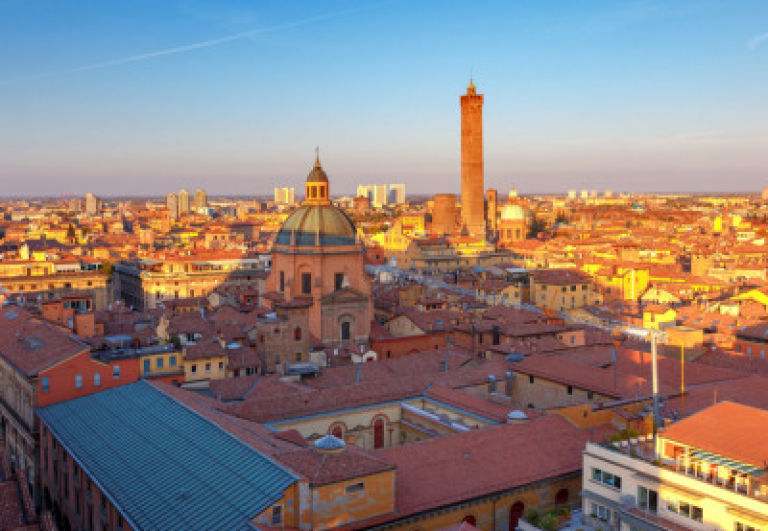
The Two Towers are one of the symbols of Bologna, and were probably also the landmark that towered in view of the city for those coming from Ravenna and the Via Emilia Sud.

Today's Piazza di Porta Ravegnana, with its towers, was in practice the point of arrival and departure for connections to Ravenna, which was already a city of great importance in late imperial times and later became the capital of the Byzantine government in Italy. 

This area of Bologna was the gateway for communication and for political relations at the highest level: first with the Empire and then with the Pope. The Two Towers towered over everything for almost nine hundred years: already built in stone at the beginning of the 12th century.

Michele Liparesi. Gateway | Exhibition at the Sonato Market Cultural Centre

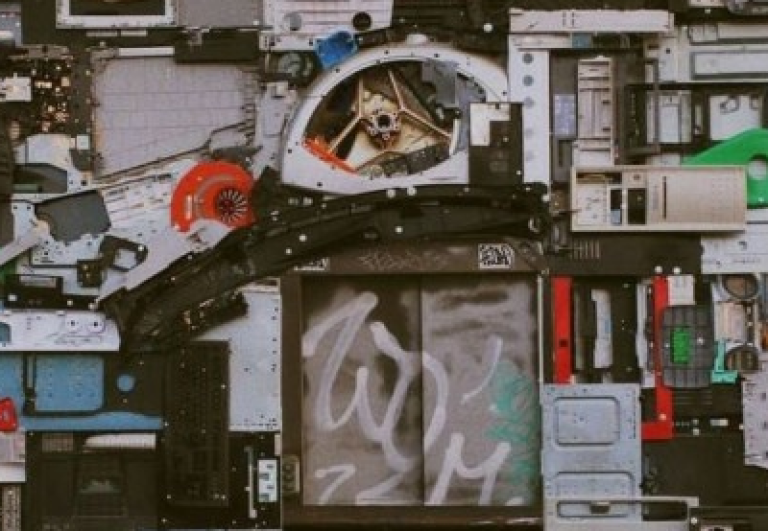
Until 1 September at the Mercato Sonato Cultural Centre, the exhibition 'Michele Liparesi. Gateway".

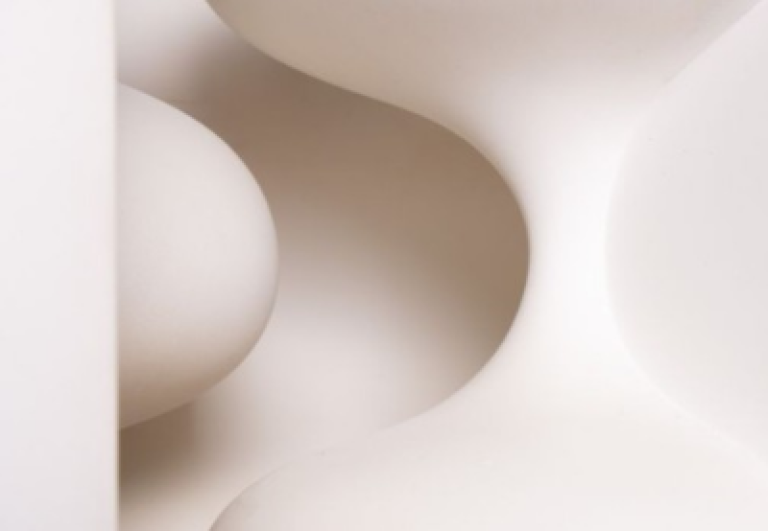
In the work Gateway, installed on the external wall of the historic Mercato Sonato cultural centre, thus visible to passers-by already from the San Donato bridge, Liparesi further 'confuses' the viewer, immersing him, this time, in a sense of temporal disorientation. Everyday artefacts become organisms that carry within them traces of a life that seems alien; not necessarily threatening, but certainly alien to us, a life where we are not indispensable.

Free Event

Opening Hours

The installation will be open daily from 10 a.m. until 00 a.m.


Sonato Market Cultural Centre | Senzaspine - Via Tartini, 3

Augusto Betti. Transversal. Pulsation. Rhythm | Exhibition at the Paradisoterrestre Gallery

Until 30 June at Galleria Paradisoterreste, the exhibition 'Augusto Betti. Transversal. Pulsation. Rhythm"

The three key words that make up the title of the exhibition are both a poetic statement and a guide to the exhibition itself. "Transversal", "pulsation" and "rhythm" are concepts whose explanation is entrusted to the artist's own words and the works on display.

A research that is rooted in the historical period in which it was undertaken, but at the same time highly topical, which now, thanks to the exhibition Trasversale. Pulsation. Rhythm, Paradisoterrestre hopes it will be rightly (re)known.

Free event 


Via de' Musei, 4 - Bologna

Victor Fotso Nyie. Memoriae | Exhibition at Off Gallery

Off Gallery is pleased to present the second chapter of a story dedicated to the relationship between design and contemporary art, and to do so it chooses a young artist: Victor Fotso Nyie (1990, Cameroon).

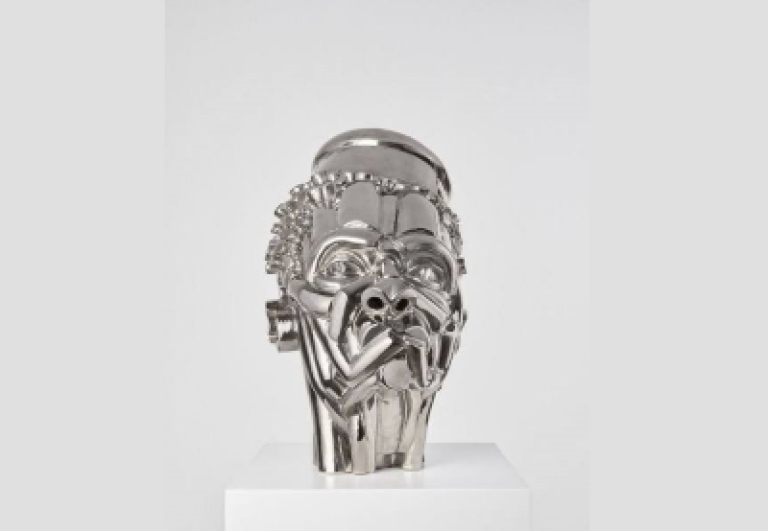
Each piece responds to material choices that do not play an accessory role but, on the contrary, revive the experience of tactility and emotional involvement. In fact, lamps, tables, chairs and bookcases are charged with a highly expressive and symbolic value, exactly as in Fotso Nyie's art.

Opening hours 

Monday to Friday 10 a.m. - 1 p.m., 3 p.m. - 7 p.m.

Admission is free and preferably by appointment by phoning 051 0232371 or email info@offgallery.it

Luca Moscariello. Puzzle | Exhibition at the Jewish Museum in Bologna

Until 12 June at the Jewish Museum in Bologna, the exhibition "Luca Moscariello. Puzzle" curated by Alice Zannoni.

Luca Moscariello's "Puzzle" project is part of the exhibition activities promoted by the Jewish Museum of Bologna, creating a dialogue between the historical narration on which the exhibition "Righteous among the Nations in Emilia Romagna" is based and the opening up to contemporary art as a means of expression to give further reflection on what history itself has been.

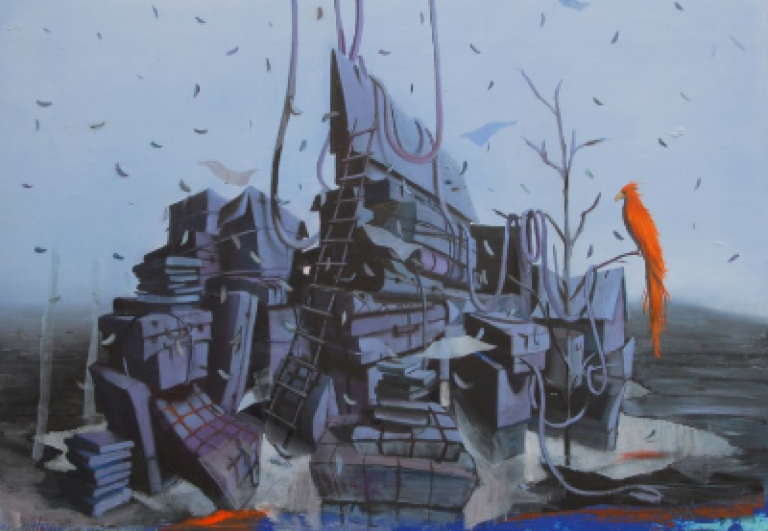
The Puzzles are a game of subjective and evocative reconstruction, planes folded like the pages of a book of memories, which just like memory lasts over time, creating new points of reflection between what we think we see and what really happens.


Reservation is compulsory at the following e-mail ufficiostampa@museoebraicobo.it

Free entrance

When Mozart graduated in Bologna

Shortly after turning 14 Wolfgang Amadeus Mozart (1756-17919) preceded by his already established fame arrived in bologna with his father Leopold to meet Father Giovanni Battista Martini, the great Bolognese master of counterpoint.

The purpose of the visit was to obtain Father Martini's guidance in order to take the examination at the famous Accademia Filarmonica in Bologna (still today in its old premises in Via Guerrazzi no. 13) and thus graduate as Maestro Composer. 

After an initial brief stay at the end of March 1770, during which he gave a well-attended concert at the home of Count Pallavicini, Mozart returned to Bologna from 20 July to 10 October to prepare for the examination and successfully passed it on 9 October 1770. 

The young Mozart's paper is still kept in its original form in the Academy's archives and the concert hall in via Guerrazzi has been named Sala Mozart in memory of and as a tribute to the guest who was so welcome and so influential.

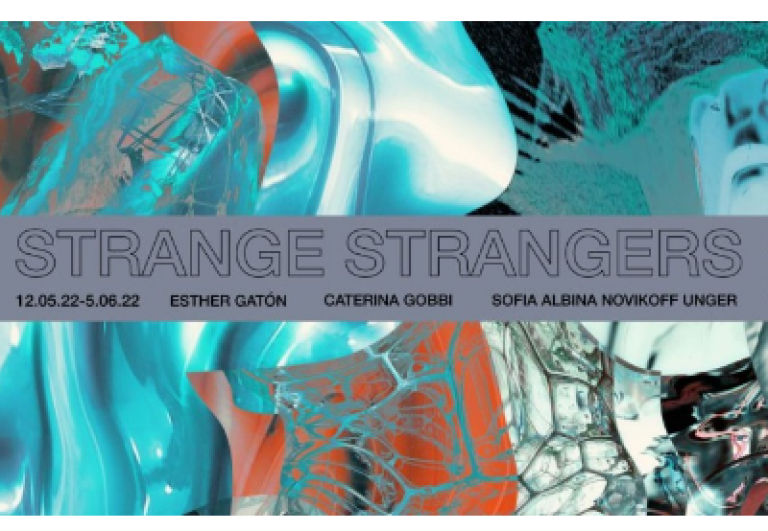
Strange Strangers | Exhibition by Parsec

Until 5 June at Parsec, the exhibition 'Strange Strangers' by Esther Gatón, Caterina Gobbi, Sofia Albina Novikoff Unger will be held.

The title of the exhibition refers to Timothy Morton's definition of "other beings and our being as other" in his essay Queer Ecology, stating that "for us, other life forms are strangers whose strangeness is irreducible.

Strangers are simultaneously disturbing, familiar and alienating. Their familiarity is itself alienating, and their being alienating is familiar'. Between them is an intimacy that, Morton continues, 'needs to think and practise fragility, rather than domination, fragmentation, rather than holism, and deconstructive uncertainty, rather than aggressive assertion, multiplying differences, growing through complete reification'.

Free Entrance 

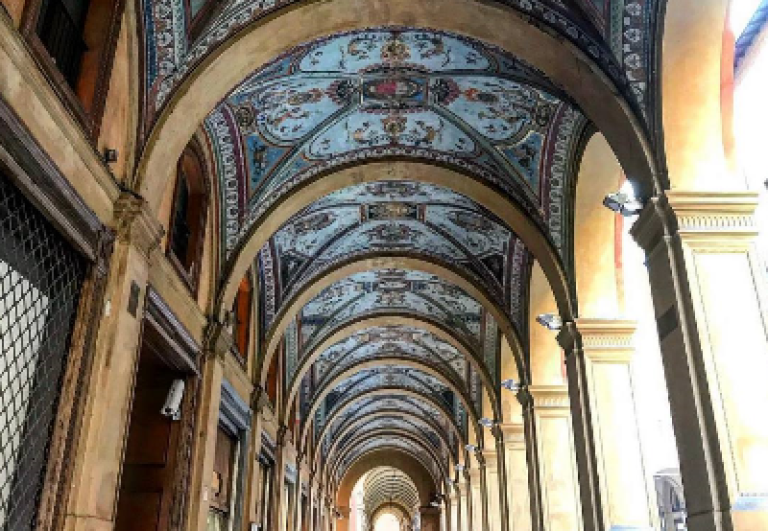
The Porticoes of Bologna

Bologna is famous for its porticoes, which are a world record for overall extension throughout the city and for the length of a single work, with the 3796 metres of uninterrupted coverage of the San Luca portico.

The use of the portico in Bologna has ancient origins: it protects from sun and rain and creates an extension of the dwelling.

They even became compulsory with a statute in 1288, with the characteristic that they had to be built on private land but were for the public use of the citizens.

Moreover, Bologna's porticos have recently become a UNESCO heritage site.

Photo: Porticos of Via Farini

advanced-floating-content-close-btn